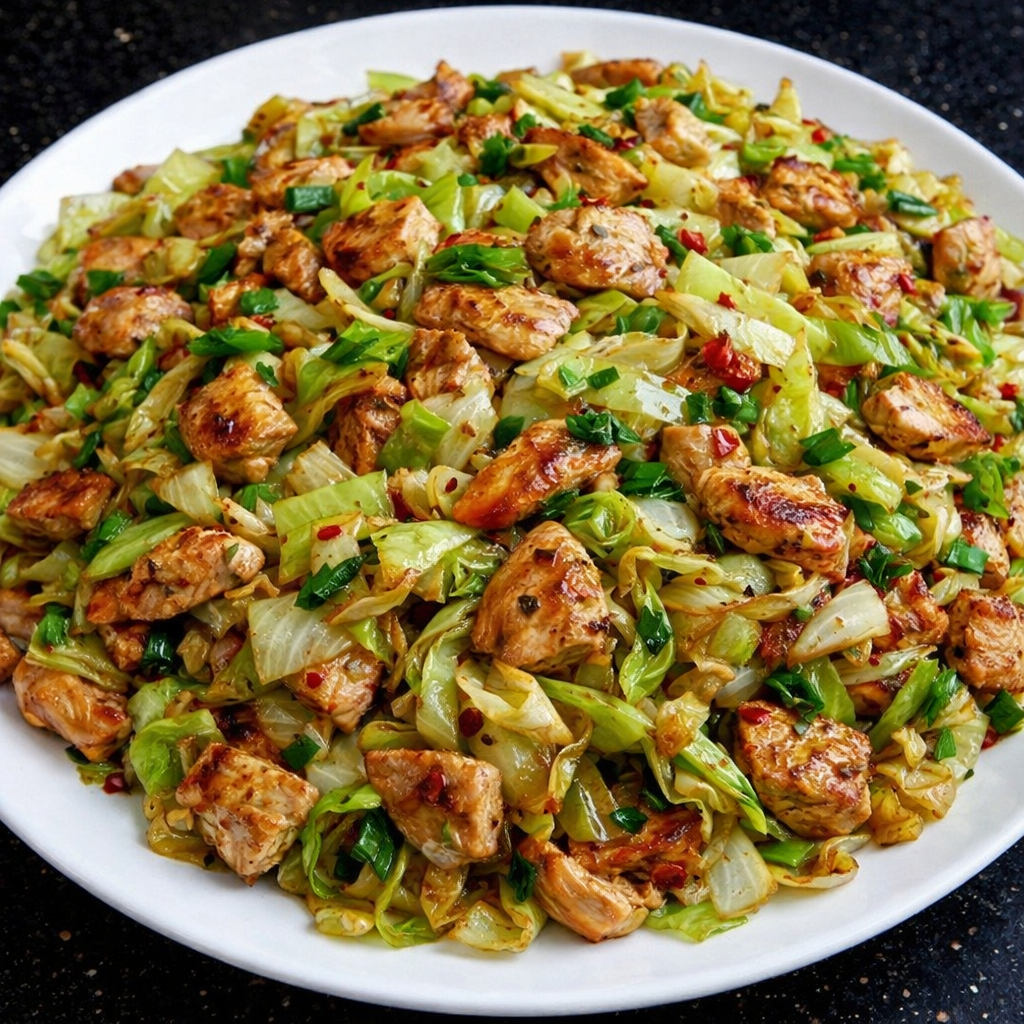
Chicken and Cabbage Stir-Fry
Chicken and cabbage stir-fry brings thin slices of chicken breast, crisp-tender vegetables, ginger, garlic, and a light soy sauce glaze together in one skillet. Preparing every component before heating the wok is essential because the cooking moves quickly and the cabbage should retain some snap.
Recipe details
- Yield: 4 servings
- Equipment: wok or 12-inch skillet, two bowls, clean plate, instant-read thermometer
- Prep time: 20 minutes
- Cook time: about 12 minutes
- Heat: medium-high
Ingredients
- 1 pound boneless, skinless chicken breast, sliced 1/4 inch thick across the grain
- 6 cups shredded green cabbage
- 1 bell pepper, thinly sliced
- 3 scallions, white and green parts separated
- 2 garlic cloves, minced
- 1 teaspoon finely grated fresh ginger
- 3 tablespoons low-sodium soy sauce
- 1 tablespoon unseasoned rice vinegar
- 1 teaspoon cornstarch
- 2 tablespoons water
- 1 tablespoon neutral cooking oil, divided
Method
- Whisk soy sauce, vinegar, cornstarch, and water until no white lumps remain. Keep it beside the stove. Use separate utensils and surfaces for the raw chicken.
- Heat half the oil in the wok over medium-high. Spread in half the chicken and cook without moving for 1 minute, then stir until browned and 165°F at the thickest point. Transfer to a clean plate and repeat with the remaining chicken, using a little of the reserved oil as needed.
- Add the remaining oil, cabbage, bell pepper, and scallion whites. Stir-fry for 3–5 minutes. Add garlic and ginger for the final 30 seconds, just until fragrant.
- Return the chicken. Stir the sauce again, pour it around the hot sides of the pan, and toss for 1–2 minutes until the glaze bubbles and lightly coats the ingredients. Finish with scallion greens.
Controlling heat and moisture
Thin cross-grain slices cook before the lean breast can dry out. Crowding the wok lowers its temperature and causes chicken juices to pool, which is why the meat is handled in batches. Cabbage contains ample water; a wide hot pan lets that moisture evaporate instead of creating a braise. Cornstarch only reaches its full thickening power after the sauce bubbles, turning the liquid from cloudy to glossy.
Texture cues and troubleshooting
The finished cabbage should bend yet still resist slightly at its thick ribs. If it remains raw-tasting after the sauce thickens, add one tablespoon of water, cover for 60 seconds, then uncover and toss. A watery stir-fry usually means the pan was crowded or the vegetables were wet; move the solids to the sides and boil the center liquid briefly. If the glaze forms gelatinous clumps, it sat unstirred before pouring or hit a cool pan. Add a splash of water and toss over stronger heat to loosen it. Bitter garlic indicates it was added too early; keep it out until the vegetables are nearly ready.
Substitutions and serving
Boneless chicken thighs stay juicier but need trimming and the same 165°F endpoint. Napa cabbage wilts faster than green cabbage, so add it after the pepper and cook only 2–3 minutes. Tamari can replace soy sauce when appropriate for the diner, but check its salt level. Serve the stir-fry immediately over rice, noodles, or on its own. Any diet-program points depend on exact brands, serving size, and accompaniments rather than the recipe title.
Leftovers
Refrigerate the cooked stir-fry in a covered container for up to three days. Reheat only the amount needed in a hot skillet until steaming; prolonged microwave heating softens the cabbage and toughens the chicken. Freezing is safe but not ideal for texture because thawed cabbage releases water. Keep leftovers away from any board, bowl, or utensil that contacted the uncooked poultry.