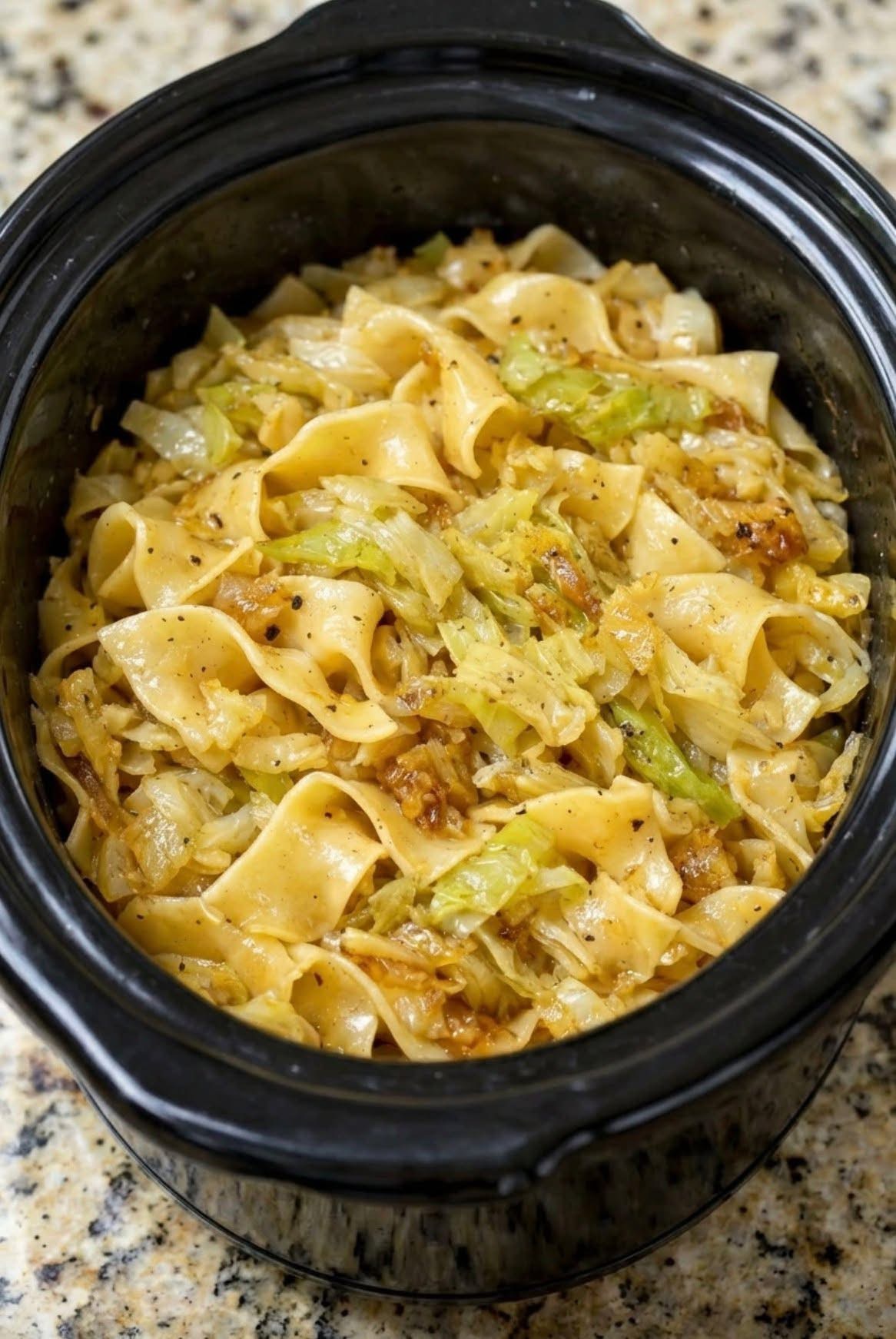
Slow-Cooker Cabbage and Noodles
Slow-cooker cabbage and noodles is a simple dish built from green cabbage, onion, butter, and wide egg noodles. The cabbage cooks slowly until sweet and tender, while the pasta is boiled separately at the end. That separation prevents the noodles from stealing the vegetables’ limited moisture and turning pasty.
Recipe details
- Yield: 6 servings
- Equipment: 6-quart slow cooker, large pasta pot, colander, silicone spatula
- Prep time: 15 minutes
- Slow-cook time: 3–4 hours on LOW
- Pasta time: according to package directions
Ingredients
- 1 small green cabbage, about 2 pounds, cored and cut into 1/2-inch ribbons
- 1 large yellow onion, thinly sliced
- 3 tablespoons butter, cut into pieces
- 12 ounces wide egg noodles
- 1/2 teaspoon salt, plus more for pasta water
- Freshly ground black pepper, to taste
Method
- Put the cabbage and onion in the slow cooker. Add salt and several grinds of pepper, distribute the butter across the top, and toss. Cover and cook on LOW for 3–4 hours.
- Check near 3 hours. The cabbage should be silky at the edges but still have enough body to hold a ribbon shape. Stir once if the outer pieces are soft before the center.
- Boil the egg noodles in well-salted water until just tender. Scoop out 1/2 cup pasta water, then drain without rinsing.
- Fold the hot noodles into the cabbage. Add reserved water a tablespoon at a time only if the mixture seems dry. Correct the salt and pepper and serve warm.
Why the two-stage approach works
Cabbage releases water as its cells soften, but the amount varies with age and freshness. Dry pasta placed directly in the cooker would require a precisely measured broth and could still cook unevenly. Boiling it independently gives control over tenderness. A little starchy pasta water then emulsifies with the butter, coating the ribbons instead of leaving melted fat at the bottom.
Yellow onion reinforces cabbage’s sweetness and becomes nearly translucent during the long cook. Butter rounds out its sulfurous notes and supplies the dish’s characteristic flavor. Salt is listed separately from the four core ingredients because it is seasoning, but its placement matters: salting the vegetables early draws out moisture, while salted pasta water seasons the noodles from within.
Common problems and corrections
If the cabbage is crunchy after 4 hours, the cooker may run cool or the ribbons may be too thick. Stir, cover, and switch to HIGH for 20–30 minutes. Watery vegetables can be left uncovered on HIGH for about 10 minutes before the noodles are added. Mushy pasta results from boiling it too far before combining; drain when it is just tender, since it continues absorbing moisture in the serving bowl. Greasy noodles need a spoonful of hot pasta water and vigorous folding to bring the coating together.
Changes, serving, and storage
Olive oil can replace butter, although the flavor becomes fruitier and less traditional. Caraway seeds or smoked paprika are optional accents, not required components. Whole-wheat egg noodles work but have a firmer texture; thin noodles are more prone to breaking. Serve as a meatless main with a cucumber salad, or pair smaller portions with roast chicken or pork.
Refrigerate leftovers in a shallow covered container for up to three days. Reheat gently with a splash of water and stir once, because high heat makes egg noodles brittle at the edges. Freezing is not recommended: thawed cabbage releases additional liquid and the pasta loses its pleasantly resilient texture.