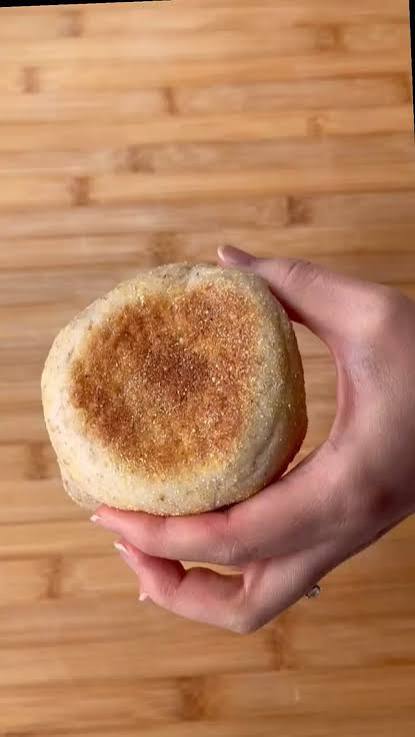
Two-Ingredient English Muffins
Two-Ingredient Yogurt English Muffins
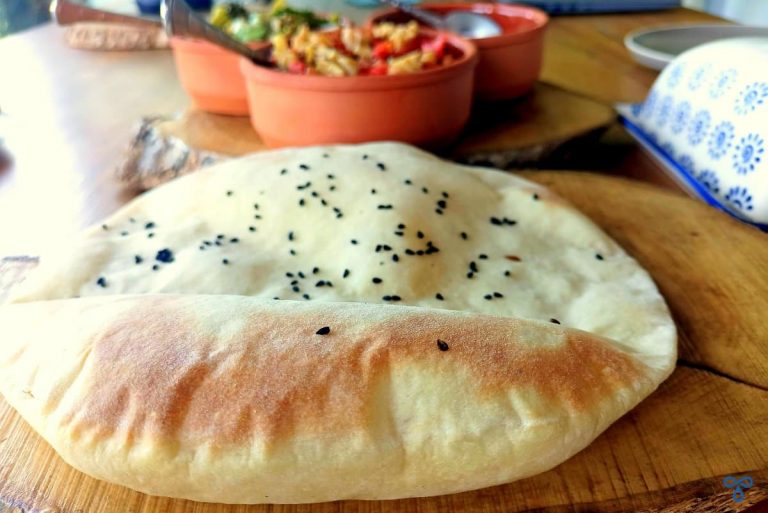
Self-rising flour and Greek yogurt form a quick skillet bread with a tender crumb and lightly crisp surface. These are not yeast-raised English muffins, but splitting and toasting them creates useful breakfast rounds without proofing.
Details
- Yield: 6 muffins
- Prep: 15 minutes
- Cook: 16 to 20 minutes
Ingredients
- 2 cups self-rising flour, plus more for shaping
- 1 1/2 cups plain Greek yogurt
If making self-rising flour, whisk 2 cups all-purpose flour with 3 teaspoons baking powder and 1/2 teaspoon fine salt before measuring the yogurt.
Equipment
Use a mixing bowl, flexible spatula, floured board, bench scraper, 3-inch cutter, heavy skillet with lid, wide spatula, rack, and instant-read thermometer.
Method
- Stir flour and yogurt until a shaggy dough forms. Turn onto a lightly floured board and fold eight to ten times, only until cohesive.
- Pat to 3/4-inch thickness. Cut six rounds, gathering scraps gently. Let them rest five minutes while the skillet heats.
- Warm a dry heavy skillet over low heat. Add rounds with space between them, cover, and cook 7 to 9 minutes until deeply golden underneath.
- Turn, cover again, and cook 7 to 9 minutes. The centers should reach about 200°F/93°C and feel set, not gummy.
- Cool on a rack for at least 15 minutes. Split around the edge with a fork and toast before serving.
Cues and troubleshooting
The dough should feel soft and slightly tacky, not wet. Yogurt thickness differs by brand; add flour one tablespoon at a time if it cannot be handled, or yogurt one teaspoon at a time if dry crumbs remain. Low heat is essential. A dark crust with a raw center means the pan was too hot; reduce heat and finish covered. Overkneading develops excess gluten and produces tough rounds. A lid traps enough heat to cook the middle.
Substitutions
Full-fat and reduced-fat Greek yogurt both work; regular yogurt is usually too loose unless drained. Whole-wheat flour can replace up to half the self-rising flour, though the muffins will be denser. Sprinkle the board with fine cornmeal for a classic exterior. Additions such as herbs or grated cheese change the two-ingredient formula but can be folded in sparingly.
Storage and safety
Serving note
Fork-splitting creates an irregular surface that browns more deeply than a clean knife cut. Toast the halves until their high points are crisp, then serve with eggs, nut butter, soft cheese, or preserves. For a savory breakfast sandwich, cool the cooked egg before packing so trapped steam does not soften the muffin.
Cool completely before sealing. Store at room temperature for one day or refrigerate for four days. Split and freeze with parchment between halves for up to two months, then toast from frozen. Flour is a raw agricultural product, so do not taste uncooked dough. Cook every center fully and use clean utensils after handling the raw mixture.