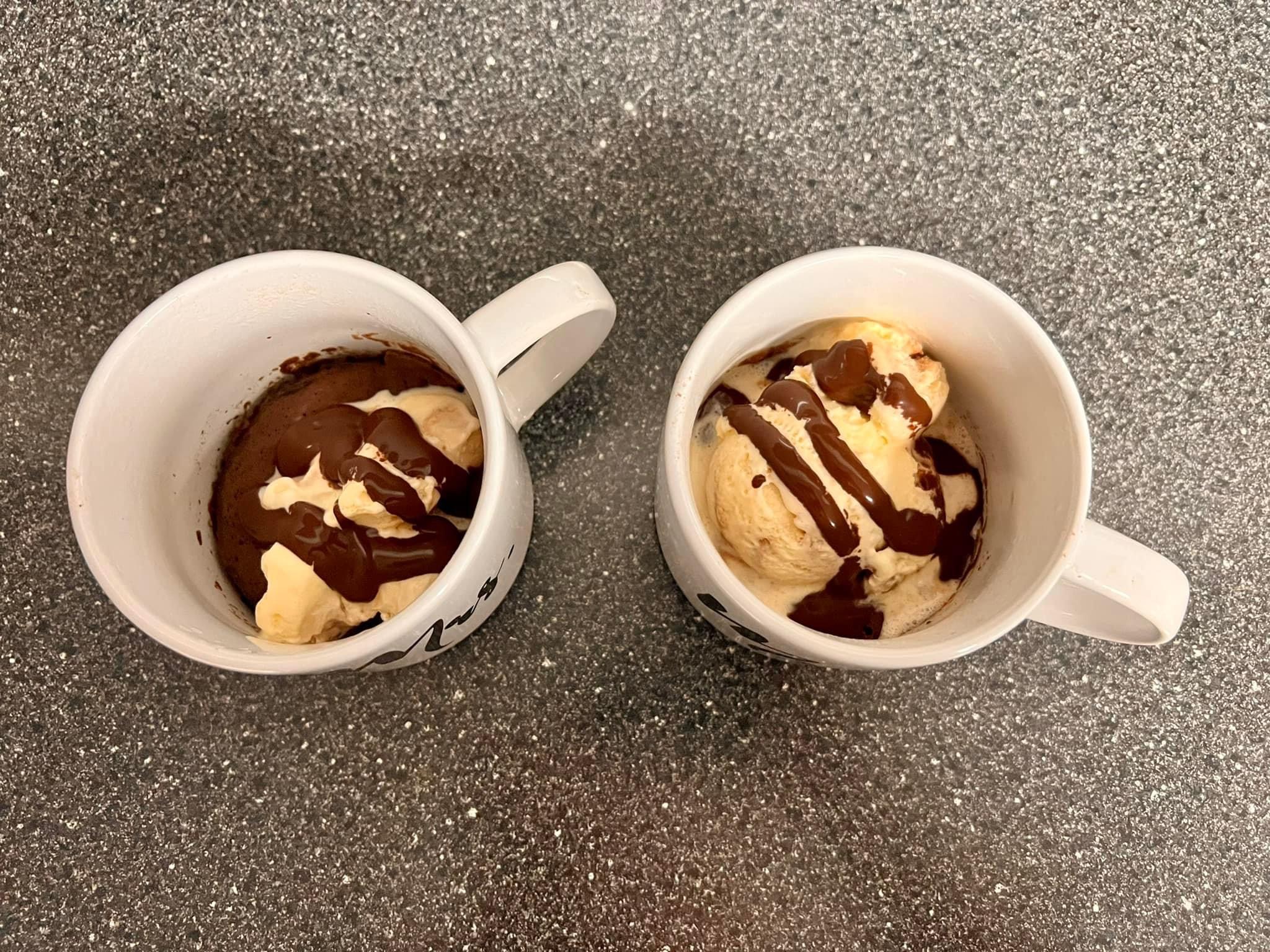
Chocolate Banana Mug Cake
Chocolate Banana Mug Cake
Yield: 1 serving
Equipment: 12-ounce microwave-safe mug, fork, measuring spoons, thermometer
Time and setting: microwave 60–90 seconds
Ingredients
- 1/2 medium ripe banana, mashed
- 1 large egg
- 2 tablespoons all-purpose flour
- 1 tablespoon cocoa powder
- 1 tablespoon sugar
- 1/4 teaspoon baking powder
- 1/4 teaspoon vanilla
- Pinch salt
- 1 tablespoon mini chocolate chips
Method
- Lightly grease mug. Mash banana until smooth.
- Add egg and beat thoroughly. Stir in flour, cocoa, sugar, baking powder, vanilla, and salt until no dry pockets remain; add chips.
- Microwave on high 60 seconds. Continue in 10-second intervals until top is set and center reaches 160°F.
- Rest 2 minutes; mug will be hot. Serve from mug.
Preparation notes
Read the full method, prepare the vessel, and arrange ingredients in order. Keep raw poultry and egg tools away from ready-to-eat food. Divide the batch evenly and preserve every rest or chill period.
Substitutions
Oat flour may replace all-purpose flour. Omit chips or replace with chopped walnuts.
Storage and safety
Prepare and eat immediately. Do not store raw batter. Refrigerate cooked leftovers within 2 hours and use within 1 day.
Planning and final quality checks
Measure every ingredient before starting and keep it in the listed condition—cold, softened, drained, cooked, or room temperature. Use the specified equipment capacity and divide the recipe for the stated yield. Begin checking at the low end of a time range, then rely on the visual cue and thermometer endpoint rather than minutes alone.
For clean portions, use a level scoop or mark equal sections before cutting. Complete the stated rest, cooling, or chilling period; moving a hot casserole or filling a warm jar can damage its structure. When one substitution changes moisture or fat, avoid making several other changes in the same batch.
Label leftovers with the preparation date. Reheat only the portions needed and avoid repeated warming and cooling. Check packaged ingredients for allergens and formulation changes. Garnishes and optional additions should remain separate and must not be used to infer diet-program points or nutrition.
+
Serving and transport
Before serving, inspect the center as well as the surface. Baked items should have no wet batter or liquid egg; poultry dishes must meet the temperature stated in the method; chilled fillings should remain cold and structurally set. If a center is underdone, return the whole dish to its cooking vessel and continue in short intervals instead of serving an uncertain portion.
Use a stable cutting board and clean serving tools. Mark equal sections before cutting casseroles, and use the stated jar or scoop capacity for individual portions. Keep crisp garnishes separate until serving so they do not absorb moisture during storage.
Transport perishable food in an insulated carrier. Keep hot food hot and dairy, egg, and poultry dishes cold until reheating or service. Write down substitutions for allergy communication. These handling details support a repeatable recipe and should remain with the article even though they do not change the dish’s flavor.